Crimping: the pain point of MC4 photovoltaic connector installation!
With the rapid development of distributed photovoltaic market in recent years, the quality problem of the system becomes more and more prominent. The fire of photovoltaic system will not only bring negative impact to the industry, but also involve personal safety. According to a foreign research report, solar connector interconnection and MC4 connector installation are ranked first and third in the fire cause. This paper focuses on the analysis of the non-standard installation of connectors, especially the crimping of photovoltaic cable and solar connector metal core.
1. Market status
In a photovoltaic power generation system, solar connectors are mainly used for modules, combiner boxes, inverters and their connections. Most of them are installed in the factory, and the crimping quality is relatively reliable. About 10% of the remaining solar connectors need to be installed manually in the project site, mainly referring to the installation of photovoltaic connectors at both ends of the photovoltaic cables connecting various equipment. According to many years of customer visit experience, due to the lack of training of on-site installation workers and the non use of professional crimping tools, the phenomenon of non-standard crimping is common, as shown below.
Types and characteristics of metal core
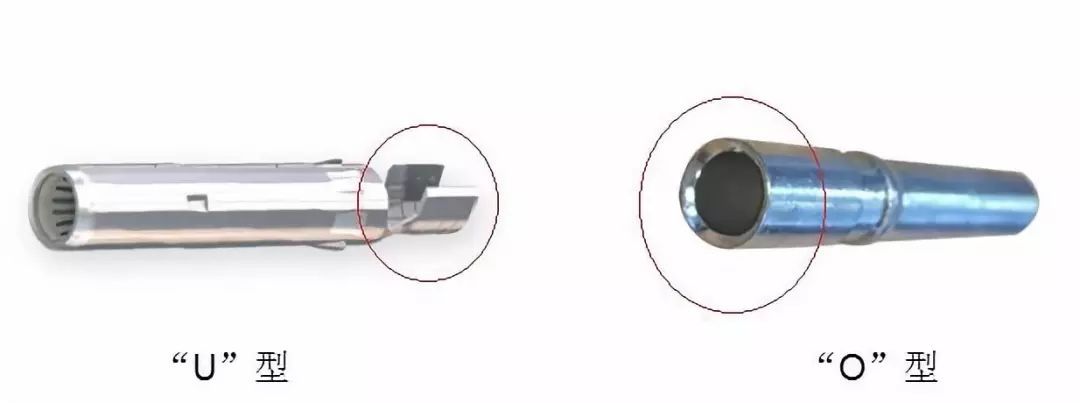
Metal core is the main body of MC4 connector, and also the main flow path. At present, the vast majority of photovoltaic connectors in the market use "U" type metal core, which is formed by copper stamping, also known as stamping metal core. Thanks to the stamping process, "U" type metal core not only has high production efficiency, but also can be arranged in chain type, which is very suitable for automatic harness production.
Some photovoltaic connectors adopt "O" type metal core, which is formed by drilling at both ends of thin copper bar, also known as machining type metal core. "O" type metal core can only be crimped individually, which is not suitable for automatic equipment.
2: Type of metal core
There is also an extremely rare metal core that is pressure free, which is connected by a spring plate and a cable. Since no crimping tools are required, the installation is relatively simple and convenient. However, the connection of spring plate will lead to a large contact resistance and cannot guarantee long-term reliability. Some certification bodies do not approve the metal core.
"U" type
Professional crimping pliers are required, with high requirements for the quality of workers
"O" type reed clamping
The engineering installation is relatively simple, but the reliability is low
3. Basic knowledge of crimping
Crimping is the most basic and common connection technology. Countless crimps happen every day. At the same time, crimping has been proved to be a mature and reliable connection technology.
3.1 crimping process
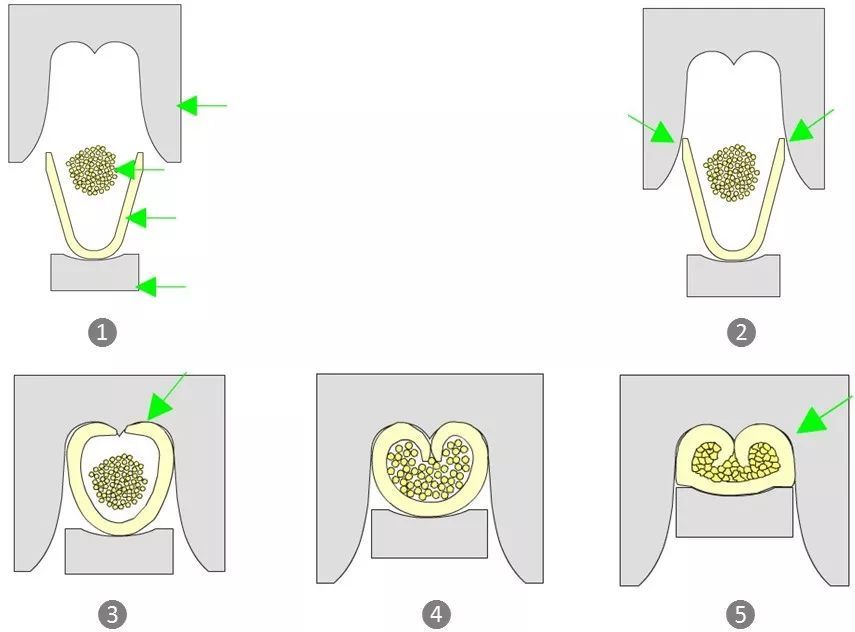
The reliability of crimping largely depends on tools and operation, which together determine whether the final crimping effect meets the requirements of the standard. Take "U" type metal core as an example. It is basically made of copper tinned material and needs to be connected with photovoltaic cable through crimping. The crimping process is as follows:
■ crimp height / width, within the defined range, can be measured with vernier caliper
■ pull off force, i.e. the force required to pull out or break the copper wire from the crimp, for example, 4mm2 cable, IEC 60352-2 requires at least 310n
■ resistance, taking 4mm2 solar cable as an example, IEC 60352-2 requires that the resistance at the crimp is less than 135 microohms
■ cross section analysis, nondestructive cutting of crimping area, analysis of width, height, compression ratio, symmetry, cracking and burring, etc
In case of releasing new equipment or new crimping die, in addition to the above points, it is also necessary to monitor the resistance stability under the temperature cycling condition, refer to the Standard IEC 60352-2.
3.4 crimping tools
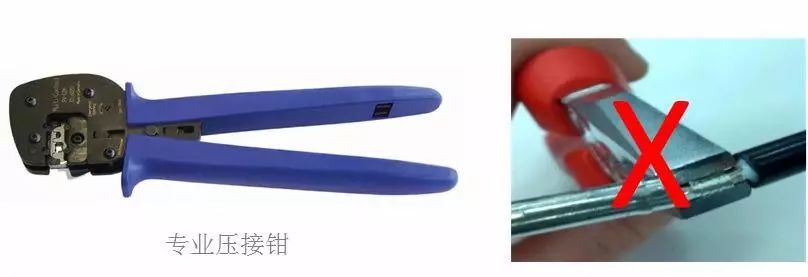
Most of the MC4 photovoltaic connectors are installed in the factory through automation equipment, and the crimping quality is high. However, for the solar DC connector that has to be installed in the project site, the crimping can only be completed by crimping pliers. The original professional crimping pliers must be used for crimping. Ordinary vises or pointed nose pliers cannot be used for crimping. On the one hand, the crimping quality is low, and this is also not recognized by solar connector manufacturers and certification bodies.
Figure 7: crimping tool
3.5 hazards of non-standard crimping
Poor crimping may lead to non-compliance with specifications, unstable contact resistance and sealing failure. It is a big risk point that affects the overall function and profitability of photovoltaic power station.
4. Summary
Solar connector is a small part, but it will affect the operation efficiency of photovoltaic project. Compromising with quality usually means subsequent high losses and risks that could have been avoided.
The installation and crimping of photovoltaic connector are the most important. It is recommended to use professional crimping tools. For engineering installation personnel, crimping training is an essential link.
IP67 Connectors solar cable connector PV DC connector For Outdoor Harsh Environments
Solar connector Male And Female Solar Connector for Solar PV System / Solar Power Supply
solar collector, solar array connector, water connector with Tin Plated Copper Contact
Stable Performance solar Compatible Connectors For Connecting Solar Panels
Solar Panel solar Diode Connector IP68 With Tin Plated Copper Contact
Solar Wire Connectors , PPO Insulated Solar Panel Connector Plugs
Fuse Connector IP68 For Outdoor Extreme Environments
Multi Contact 4 Inline Fuse Holder Connector For Photovoltaic System
fuse connector and a terminal fitting, fuse connector block
PPO Insulated Waterproof protection solar connector fuse on connector